
Aoril 10, 2026
Things I Learned This Week at My Alma Mater
Oh, to Be a Commodity Trader! On Wednesday, the DJIA was up 700 points and oil dropped over $15 a barrel in one day. If you went really short at 2:30 pm and sold after dinner, you made $16 a barrel and you are brilliant. Or ridiculously lucky. Or you are Donald Trump’s barber. At the request of the President of Pakistan, who presented President Trump with a 10-point Iranian proposal, there has been a two-week delay in obliterating a civilization. After the media criticized the conflict in general, there were calls for congress to come back into session to make the President end the war. After threatening total destruction, Iran sends a cease-fire proposal through Pakistan. Much ado about little. But back to commodity price volatility. Learn to live with it. The continuing risk premium will be highly correlated with Iran’s likelihood of being honest and following through. But this is all good. A ceasefire is always a positive development. Now let’s see what happens next.
That Didn’t Take Long. The next day on Thursday, oil opened with the price up by $8 a barrel. By lunch, it was up $4 a barrel and the market was still green. All it took was Israel hitting Hezbollah and the Strait closing again. By the time you read this, it could be open or not. Oil could be up or not. The volatility index for oil is around $90, which is not sustainable, but as the saying goes, the market can stay irrational longer than you can stay solvent.

The Yin and Yang. If the Strait is not opened in the next six to eight weeks, the global economy is likely to slip into a recession. A ceasefire that holds would allow us to get by without a recession. It is very binary, with only about a two-month time spread. Just open the Strait, and everything will be fine. Soon.
The Event! The SMU Energy Symposium was held this week. It was excellent, with an exceptional lineup of speakers. It was sponsored by The Maguire Energy Institute at the Cox School of Business at SMU. Tonight at the symposium dinner, we will give Mike Wirth, CEO of Chevron, the Frank Pitts Award, and former Secretary of Commerce Don Evans the Pioneer Award to close out what will be an exceptional day.
Set-up.
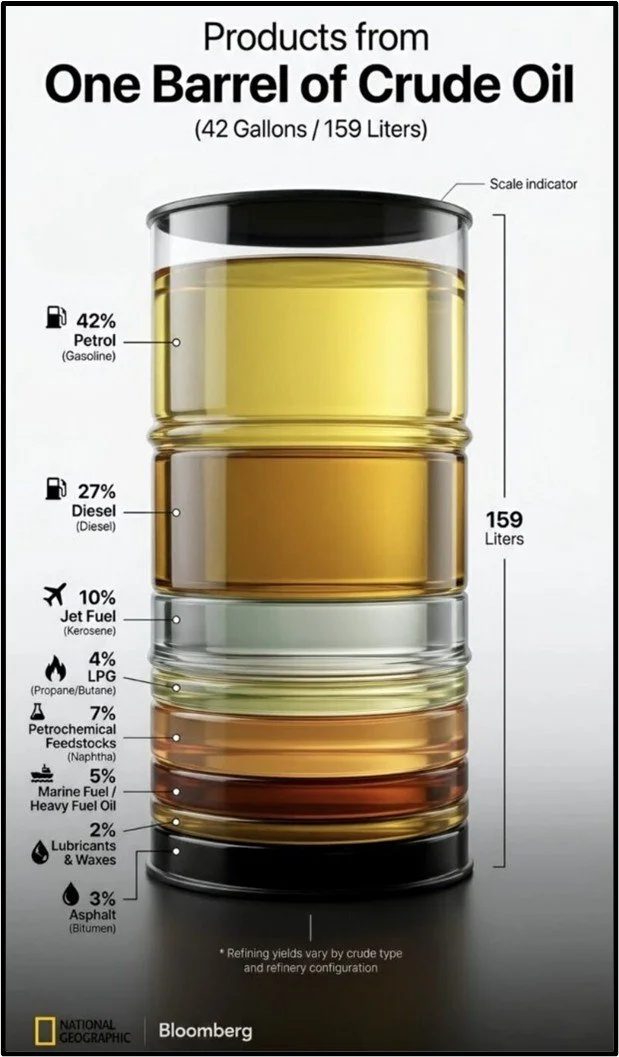
Consumption of barrels of oil per capita, is 22 barrels in the U.S., 8.5 barrels in Europe, 4.3 barrels in China and 1.4 barrels in India. Overall, global demand has to increase, and today the world understands, much better than five years ago, that oil is not going away and, in fact, supply needs to increase to ensure energy security around the world.
Power is now driving growth in electrons. From 2020 to 2025, power demand saw a 0.5% CAGR. Going forward, over the next five years, it is expected to see a 2.5% CAGR, a dramatic increase.
50% of automobile sale in China are EVs.
Development of the Global Natural Gas Market. It is already a global market, with LNG serving as the link. With Qatar experiencing disruptions, the focus is shifting to U.S. LNG as well as other markets. Global gas demand is growing at a 4.5% to 5% rate and is expected to stay there for the next few years. The two biggest U.S. players are Cheniere and Venture Global. The U.S. can ship LNG to foreign markets at approximately $8/Mcf, representing a significant arbitrage relative to landed LNG prices in Europe and Asia, with the U.S. serving as a major supplier to Asia.
The expected LNG oversupply in 2028-2029 will now likely not occur, so the glut risk is gone.
E&P will be very important to guarantee supply for LNG growth.
Building an LNG plant requires approximately 30 permits and around $50 million a year to reach FID, secure offtake contracts, get the project bid and find financing. Once permits are complete, there is a 90-180 day window to move forward. The average time from project start to first gas has been about 120 months, or ten years. That is why there are basically only four players in U.S. LNG. Europe is expected to become structural importer, and net zero will require a much longer time horizon. Policy mistakes are being recognized and addressed.
There is no greater leverage than controlling a country’s energy supply.
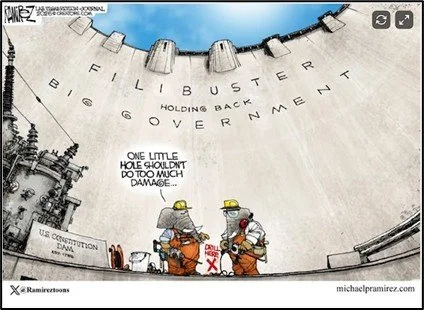
There is concern that public backlash against the industry, driven by the belief that AI data centers will increase electricity prices, could lead the next administration to halt LNG permitting to keep more gas in the U.S. Australia has a resource problem, Qatar has a transportation problem and the U.S. has a policy problem.
Realities
Oil production will expand outside of the Gulf as barrels become more valuable.
Contracts in Venezuela may come sooner than expected.
Capital will be deployed to create alternatives to the Strait for transportation.
Energy Security Panel. Bob McNally of the Rapidan Group, Ken Hersh of HFI Capital and Helima Croft, MD at RBC Capital Markets:
It will take a long time to return flows to normal. Volumes remain down in the Red Sea even after a deal with the Houthis in Yemen.
It is remarkable how complacent the world became regarding the Strait of Hormuz and how quickly that assumption changed. The market now realizes that a risk premium must be reflected in oil prices, regardless of the outcome.
The forward curve out three to four years doesn’t reflect enough risk premium.
The panels were a who’s who of the energy sector. Bill Armstrong, Ben Dell, Danny Rice, Scott and Bryan Sheffield, Nathan Strik, Robert Bryce and many others. I was flattered to moderate the panel. Don’t miss the next one.

More of a Necessity. About five weeks ago, when the Iran conflict started, we wrote about how the Leviathan Field, a huge natural gas field off the coast of Israel, had suspended operations due to worries that the platforms were too irresistible a target. But with Qatar sustaining damage to its LNG trains, even if the Strait was opened tomorrow, the world would still be short natural gas. So, with the conflict still ongoing, Chevron, the operator, has resumed normal operations after 33 days of suspended production. The bulk of the gas goes to Egypt and Jordan, leaving those countries to try to find available LNG cargoes to replace Leviathan gas, which is much harder and more expensive with Qatar constrained.
PPHB U.S. Energy Market Highlights:
Commodity Prices: WTI crude oil is currently $89.93 per barrel (down ~19.4% week-over-week) and natural gas is $2.67 per MMBtu (down ~4.6% week-over-week).
Crude Oil Production: U.S. crude oil production is currently ~13.6 MM BOPD (up ~1.0% year-over-year).
Crude Oil Inventories: U.S. crude oil inventories increased by ~3.1 million barrels week-over-week vs. an estimated decrease of ~1.0 million barrels.
Onshore Drilling Rig Count: There are currently 545 drilling rigs operating in the U.S. (decrease of 3 drilling rigs week-over-week).
Headlines
MIT says AI could replace 1 in every 8 American jobs.
Iran is threatening strikes on data centers operated by Amazon, Microsoft and Oracle across the Middle East.
Approximately 75% of Americans oppose building new data centers in their communities.
And Elsewhere. Ed Miliband, the UK’s Secretary of Energy, has been a strong advocate for Net Zero polices. As a result, the UK implemented a 75% windfall profits tax on North Sea production, and no new natural gas fields have been approved in over a decade. But as the saying goes, “Practicality beats ideology every singe time, just not as quickly as we would like.” Now, it is expected that we will see the “inevitable pivot.” The UK is facing an urgent domestic energy crisis, and the Iran conflict only makes it worse. Much worse. The UK energy policy has essentially been to “shut it down,” but now that doesn’t seem like such a good idea. As a result, the Jackdaw natural gas field, operated by Shell, may very well receive government approval because, while reaching net zero on time is important, keeping the lights on and the refrigerator running is more important that climate ideology. Remember that Shell is becoming fully domiciled in the UK after having a UK and Netherlands shared structure, which broke down a couple of years ago when a Dutch judge forced Shell to shed its U.S. refineries and many other assets. They seem more at home in the UK for now.
Job Well Done! It is with a raised glass that I toast the retirement of one of my very favorite people. Cindy Taylor is retiring. Most of us didn’t think this would ever happen. Cindy retired? Didn’t compute. I have known Cindy for decades and it has been a privilege. She was CEO of Oil States for 17 or so years, working her way up from treasurer. Her pedigree is also impressive, having served as CFO to LE Simmons & Associates, the early SCF Partners that financed the oilfield services market for years. I met her when she was with Cliff Drilling. She has served on the boards of the Dallas Fed and AT&T. She grew up in Goldthwaite Texas, a jock who played all the sports, and when she came home and told her father that she made cheerleader as well, he said she had to buy her own outfits. Cindy attended Texas A&M and continues to be a very avid supporter. I think Cindy will find herself just a different kind of “busy” in retirement, just on her own schedule. Lloyd Hajdik, the former CFO, will take up the reins. While Cindy will be a very big act to follow, I have no doubt he will fill the shoes very well. His background includes time at Ernst & Young, Shell, NL Industries, Helix and others. He went to Texas State. The best to you both!
Working Together. Last week, we wrote about the EWTC annual meeting, the trade association for the oilfield services industry. I moderated a panel that included operators and a rig company, and we talked about performance-based contracts and closer alliances with the operators. While service and operating companies work very closely together, the relationship is usually described as highly collaborative, but in the end, customer and service company dynamics are rarely constructive. That is what made the announcement by Valaris, Halliburton and Petronas so interesting. These three service companies are teaming up with the national oil company of Malaysia. Petronas is to explore in Suriname, the country next door to Guyana, where Exxon has hit an astounding 17+ wells in a row. Their focus will be on trying to copy that success. Valaris is the rig company, merging with Transocean, and will provide the rigs. Halliburton is the world’s second largest oilfield service company and can provide subsurface, well construction and digital solutions. Petronas supplies the project management, geoscience and capital. We will see if the “consortium” form of management works.

Freezing in the Dark. A number of states have passed legislation on renewable power and reducing CO2 emissions that are proving very difficult to achieve while still keeping the lights and power on. As noted above, ideology sounds great until it doesn’t allow for a normal, comfortable life. Renewable energy mandates do little or nothing to gasoline prices, but that hasn’t stopped some states from taking actions that are politically positive. If gasoline prices are high due to the Iran conflict, something must be done to help the voter and consumer. It comes down to whether climate action is affordable. With higher prices for everything hitting consumers, they are saying no. If saving the planet is going to drive up gasoline prices, that just won’t do. Except this really isn’t about saving the planet as much as gaining control. New York State Governor Kathy Hochul said she might delay implementing the 2019 climate laws, noting that hitting those net zero targets might be “costly and unattainable.” With offshore wind facing issues along the East Coast, many of the states that passed laws against fossil fuels will find themselves increasingly short of power, and the wall of opposition against natural gas and pipelines will continue to erode in favor of reason and necessity.
OMG. I did not realize that Bernie Sanders and Alexandria Ocasio Cortez are calling for a nationwide moratorium on data centers for AI. They say data centers drive up electric rates when the real culprit is the green energy policies that have forced coal and nuclear plants to shut down. Instead of blocking data centers state should require the AI hyper scalers to build their own power generation or agree to have their electricity cocktail during grid emergencies. Many are already doing so, if you want to see the way to do it, look at the victory in China. Maine has already announced a stop to data centers, but data centers haven’t been a big deal there because the electricity race has plenty of room to grow elsewhere as it reaches the pentacle of acceleration in the country.
Fund Flows. Since 2001, more funds have flowed out of ETSs for the energy sector than into them. All other sectors have seen net positive fund flows over the past five years. Now, energy makes up less than 4% of the S&P while technology makes up 32%. The S&P 500 energy index has jumped 33% so far this year before the Thursday sell off. The technology sector is down 5%.
Redo. Macondo, the offshore deepwater rig disaster in 2011, reshaped how the U.S. government looked at the offshore oil and gas industry. The Minerals Management Service (MMS) looked after the offshore industry originally. But after Macondo, more and closer oversight was deemed needed. The responsibility was divided between the Bureau of Ocean Energy Management and the Bureau of Safety and Environmental Enforcement. It didn’t help that the MMS was involved in ethics scandals including drugs, sexual misconduct and self-dealing by employees. The current administration has decided to merge the two agencies into the new Marine Minerals Administration, moving to what was described as a “more modern, coordinated approach” to managing offshore resources. This primarily involves critical minerals policies, with the goal to “improve coordination and increase efficiencies across offshore leasing, permitting, inspection and environmental oversight, while maintaining all existing regulatory protections and rigorous safety standards” according to the Interior Department. Anything that streamlines permitting and approval of offshore drilling and production activity we deem to be a very good thing. Good luck.
Correction! Last week, I published a list of the best performing energy-related stocks and I made a glaring omission. To Matt and Doug, I apologize. TechnipFMC (NYSE:FTI) is up 53% year-to-date as I write this. The company is benefitting from the recovery in deepwater around the world and the increased focus on LNG. They are exceptionally well positioned along with Baker Hughes to be at the right place at the right time. Well done gentlemen.
Going Nuclear. A couple of years ago, the private equity group Pelican raised almost $1 billion to invest in nuclear industry service companies, given that the industry is as fragmented as the U.S. oilfield services industry. They have made a number of investments and are likely to raise another fund. Smart guys. And its is catching on. Energy Capital Partners (ECP), started in 2005 with $36 billion in commitments, is a platform focused on energy transition, specifically electricity generation and sustainable infrastructure. Energy Capital is acquiring EnergySolutions, a leading nuclear company providing integrated solutions across the full nuclear life cycle. This includes transportation, processing, recycling and disposal of radiological material. What is interesting is that ECP owned the company once and is now buying it back. “With surging demand for baseload power from manufacturing, LNG and data centers, utilities are extending reactor operating licenses rather than retiring assets, previously shuttered plants are being brought back online, and a newbuild market is emerging.” No price was announced, but it is increasingly clear that nuclear is getting closer to “hot” every day.

Up and Going. We wrote last week about the planned IPO of HMH Holding. It priced 10.52 million shares at $20 per share with the usual green shoe. It trades at an estimated 10x to 11x earnings (not EBITDA). To refresh, HMH was established in 2021 through the merger of Baker Hughes’ subsea and surface drilling systems businesses and AkastorASA’s MH Wirth. So, the history of the company goes back 100 years but it is the newest energy IPO! After pricing at $20, the stock now trades around $18.50 with a market cap of ~$820 million. The rumor was that it was 5x over-subscribed. Energy stocks in general have been very volatile over this period. Best of success guys!
Broader Horizons. I'm sorry, but the world has its knickers in a twist because U.S. gas prices are almost as much as California's normal gasoline price. Oil hit the highest level in four years. Wow. But at the same time we are taking out a nuclear threat, the world's largest terrorist supporter and the country who has killed 30,000+ of its own people in this year alone. The last seven presidents have said something needs to be done. And we're calling Congress back to vote to end this deranged war because oil prices are at a four year high? After 47 years of tyranny in Iran, we are going to rid the world of the Iranian Ayatollah regime and the cost is that we have to pay the highest gasoline prices we've paid in four years. I am stunned at either the lack of understanding of how the world works or the naivete today of people in this country. Studies show that only 15% to 25% of Americans have been outside of North America. For people who have never been outside of North America and think they know what the world looks like, what the people feel or understand or the different values of life, need to start watching MS NOW and some documentaries. Or just learn about the rest of the world by traveling like everyone else. You'd be surprised.

The Domestic Market. Richard and John Spears are brothers who have tracked the metrics of the industry for decades. They know their stuff. The following is a comment from Richard. “You know that drilling sentiment has shifted when oil companies once again compete for the right to hire a rig, like they did for Rig 50. I’ve given several interviews over the last few weeks on whether U.S. onshore drilling activity is reacting to higher oil prices. My previous responses were that we are still seeing relatively steady activity, as our customers need more certainty around future oil prices, not just today’s oil price. But last week, I gave a different answer. As the conflict unfortunately continues and there are more reports of infrastructure damage in the region, we are seeing the oil futures strip move up for December contracts. If year-end futures remain above $70, there is an increasing possibility of higher U.S. onshore drilling and completion activity later this year. The global markets may be looking for relief from strained energy supplies, and the U.S. oil and gas industry has the ability to respond.” Thanks Richard.
Geared Up. Fermi, the AI Data center project underway in Amarillo (also known as Project Matador), which is headed by former Texas Governor Rick Perry, announced that it has secured a $165 million senior secured, first lien delayed draw term loan from an affiliate of Beal Bank to finance the remaining progress payments on its previously ordered six Siemens Energy SGT-800-57 gas turbines, with delivery scheduled in 2028. The campus is designed to ultimately generate 17 GW of firm, low-carbon, on-demand power with AP1000 advanced nuclear reactors as the long-term backbone. The actual borrower is Fermi Turbine Warehouse II LLC, a wholly owned special purpose entity of Fermi Inc. This deal follows Fermi America's $500 million turbine warehouse facility funded by MUFG Bank, Ltd. and the ~$200 million facility funded by Keystone National Group. Both closed in February 2026.

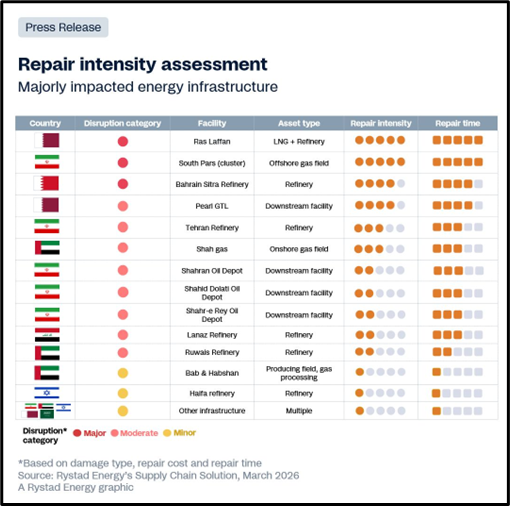
Repair Bill. It is estimated that $25 billion worth of damage has been done to energy facilities across the Gulf. Thanks Kirk Edwards for the following chart.
Raising Cane. The markets are in turmoil and uncertainty is everywhere. You would think it an odd time to try and raise a fund, much less a $23 billion fund. But KKR just did that. And it’s a record for a fund whose investments are solely going to be focused on North America. That’s not the U.S., that’s North America. It’s the broadest swath of investors imaginable, from sovereign wealth funds to high-net-worth individuals to pension funds. One interesting point is that it intends to support majority owned companies in implementing broad-based employee ownership programs. It sounds like they’re doing good deeds. Of course, the goal is to make money. But if they can find a way to do good and make money, more power to them. Some of us still remember Gordon Gecko, where greed was good and private equity firms were the bad guys who came in and bought family businesses, fired everyone and closed the shop. It looks like we have come a full 180°. We have moved our industry purview from “shareholder” to “stakeholder”. $23 billion. A record, and in this market to boot. It’s a drop in the bucket compared to the ~$1.3 trillion in private credit now, but it says a great deal about investors’ confidence for the amount raised and to the managers at KKR who are seeing the economic benefit of North American business opportunities.
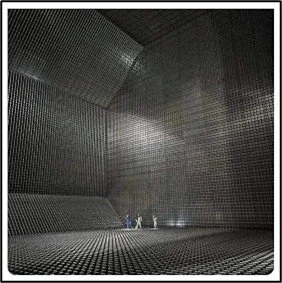
This is the inside of an LNG tanker hold. The panels keep the temperature at minus 102 centigrade.
Banned! Maine is poised to halt new data centers. They’re going to freeze construction and pass a bill that calls for a ban on major new data center construction until November 2027, so the state can assess the impact of such development on the environment and electricity grid. The ban would apply to data center projects of at least 20 megawatts, which is enough energy to power more than 15,000 homes. This is a small data center. The one Chevron has announced with Microsoft in West Texas is starting off at 2.5 gigawatts and could power more than 2 million homes. So, these weren’t enormous projects that were planned for Maine to begin with, but I guess they don’t even like the little guys. Maine has some of the country’s highest residential electrical prices now, and everybody is concerned that the surge in power demand will further push availability and cost up. You’re really starting to see the momentum shift. Three months ago, everyone was talking about pulling power off the grid. We were preaching that most would have to be generated behind the meter for this very reason. It looks like we are now starting to see that twist a little bit now that turbine deliveries are at least in sight and working through the same time supply chain as transformers and other electrical equipment required for power generation. Remember that turbines and equipment have been delivered and continue to be delivered all through this, even prior to construction being finished. Yes, the top three players who represent 70% of the turbines we use are all doubling capacity and surely we will just be revving up soon by tripling capacity by the time demand begins to slow down. But that is still a year or two out there.
SkyNet. You just thought that AI has been hot. It is getting much hotter quickly. The latest AI model is Mythos, and it is so powerful. It isn’t being released to the public, but only tested by a handful of companies. Developed by Anthropic, it is designed to do extremely high-level technical work, especially in cybersecurity and coding. It can find software bugs and security flaws far better than humans and can even write code to fix or exploit those flaws. In 2019, early models like GPT-2 could barely write a few decent sentences. By 2023, GPT-4 could write essays, solve math problems and even pass many school tests at a high level. Through greater computing power, better algorithms and removing limitations, we could see another big leap by around 2027, similar to the jump from GPT-2 to GPT-4.
Any and all comments, arguments and rebuttals are welcome!
In addition to my association with PPHB, I serve on three private company boards. Merit Advisors is a property valuation company and I have long been a fan of optimizing how a business is run, not just the tools we make. Merit is in the business of savings companies’ money, actual cash, by doing a much more in-depth and realistic view of equipment and reserve valuations and I am very impressed with their work. I am also on the advisory board of Preng & Associates, a leading executive search boutique that specializes in all things related to Energy & Power.
I serve on the Advisory board of the Energy Workforce & Technology Council (formerly PESA), the National Ocean Industries Association (NOIA), and the Maguire Energy Institute at SMU my alma mater.
jim
214-755-3914 | james.wicklund@pphb.com
Leveraging deep industry knowledge and experience, since its formation in 2003, PPHB has advised on more than 180 transactions exceeding $11 Billion in total value. PPHB advises in mergers & acquisitions, both sell-side and buy-side, raises institutional private equity and debt and offers debt and restructuring advisory services. The firm provides clients with proven investment banking partners, committed to the industry, and committed to success.
