
April 17, 2026
Things I Learned This Week in Montana
It’s Still Cold. As this missive hits your inbox, I will be floating down the Missouri River in Montana with Josh, my guide. The low tomorrow morning is forecasted at 19 degrees, and I hear the fish are biting. Bozeman was solid snow, but Butte is pretty clear and 19 degrees.
I promised a friend, a professor in Petroleum Engineering at the Montana Technological University, last year that I would come speak at his event, the 31st Annual John “Jocko” Evans Symposium. The school was formerly the Montana School of Mines, and its Private Equity Program is over 70 years old, aided by government assistance to train engineers to work in Alaska, where Texas and Louisiana engineers were reluctant to go. They know cold here. And I figured that, since I am already up here on a Thursday, I might as well make the most of it.
Iran. Things could have changed any number of times between when I write this and when you read it. The blockade may be working, but the story now is that when the Strait does actually open, it will takes months or years to get back to where we were two months ago. Maybe. I expect there will be a wave of pipeline construction, but I remember several years ago when Saudi Arabia was hit by Iran, taking 6 million barrels a day off the market. For reference, oil traded above $60 for only one day. Two weeks later, it was back at full throttle. The importance of these facilities and the scale of the economic cost mean you should almost always take the “under” on these kinds of construction and repair situations. This isn’t a U.S. government project. That would be an “over.”
We have said for the last few weeks that if the Strait is opened in “X” weeks, a global recession is almost inevitable. Right now, the “X” is about 7.
Set-up. From an oil price perspective, the outlook is strong. We have drained inventories of both crude and products. Most of the damage in the Gulf States was LNG and processing facilities rather than production assets, but it will still take some time to repair and commission. Some risk premium, tariff, or toll will be added to the price of oil moving through the Strait, and since it is a global price, all other oil-producing regions benefit. I don’t see the point in delving into the minutiae of the Strait issue and its impact. I can no more predict the outcome than I can predict oil prices. All the data, numbers, comparisons and projections have been run. It’s pretty binary now. I will wait to opine until I have some more reliable news.
The Odds? The real risk is that the Strait doesn’t open in the next seven or so weeks, especially considering we are negotiating with religious fanatics who only have one lever of advantage left. When that leverage is gone, they have little left to do but lash out in every way they can. Surrender for religious fanatics is rarely seen. Unfortunately, this is a meaningful probability. As long as they insist on enriching uranium, Trump can’t claim victory in what was his primary reason for war – materials to make a nuclear bomb. And then there is the issue of trust.
Ying and Yang. Planting season is over in much of Southeast Asia and was completed this year with minimal fertilizer due to the Strait being closed, which will push crop yields down. Pakistan and Bangladesh get 99% and 67% of their LNG through the Strait, or at least they did. Factories are already cutting hours or shutting down. Wealthier countries are paying more, while poorer countries are having to do without. Global uncertainty will cause interest rates to rise. All of the issues we are wringing our hands about have been known. They are just getting worse over time. But this too will pass. That doesn’t leave much to talk about, discuss or conclude, so we keep moving forward. For our industry, there are going to be some amazing opportunities, and now that the world understands our importance, life should get easier. For the world, this is the pain that must be endured when a deadly cancer is being cut out and removed.

Interdependence. We moved from a nuclear deterrent, where war would mean mutual destruction and economic disaster. Then enough countries acquired nuclear weapons that the fervor subsided, and we shifted toward economic interdependence. To me, the risks of this became clear was with the first tariffs over a year ago. Damn, 70% of everything we need for our daily lives comes from China. Not want because it’s cheap, but need for our way of life. California’s governor lamented that most of the Christmas gifts under the tree came from China, bemoaning the effect of the tariffs. It didn’t seem to bother many people, even when supply chains were exposed and our dependence on China was shown. We want cheap. We are incensed that we have to pay 2022 gasoline prices just to rid the world of a terrorist-sponsoring, fanatic theocracy not supported by 80% of the population, 35,000 of whom were killed in the last seven months for protesting. But the Iran conflict is showing the world that we have entered a new phase where economic interdependence is no longer a deterrent to war. As one writer put it, that interdependence, especially with China, is “a map of vulnerabilities.” Power plants, LNG facilities, refining and transportation infrastructure have all been developed around the Middle East and much of the world through mutual investment and alignment among neighboring countries and international aid agencies. Those previously “protected” assets are no longer protected on either side of the conflict. Qatar’s natural gas field and processing facilities share a border with Iran’s operations and have been attacked. The UAE has been hit by more Iranian missiles than Israel. This trend is not something the U.S. started. We hit Khartoum Island, Iran’s largest oil facility, but assiduously targeted only military assets. That restraint appears to be off the table now. That is a scary statement since it makes the probability that a nuclear weapon could be used somewhere above zero.
How Crude. Last week, U.S. crude oil exports surged by 1.08 million b/d, averaging 5.23 million b/d, as Asian and European buyers looked for alternative supply markets. There was one story describing a flotilla of tankers heading to the “new filling station,” the U.S. Gulf, and while that is impressive, it may not continue for long. Inventories fell by 913,000 barrels and U.S. crude oil production is not expected to grow. We aren’t energy independent either. We import about 6-7 million barrels and export about 4-5. We get roughly 4 million barrels from Canada alone. Last week, the U.S. came close to becoming a net crude exporter for the first time since World War II.
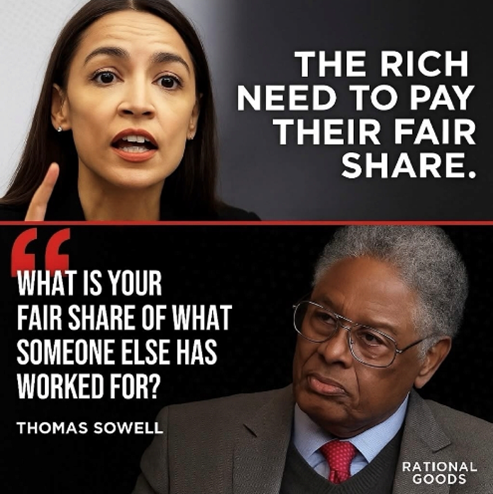
Snippets.
The crown prince of Saudi Arabia compared Iran to Nazi Germany, saying Iran cannot have a nuclear weapon and that people didn’t recognize Hitler until it was too late.
ConocoPhillips sends a team to Venezuela to evaluate oil & gas opportunities.
BlackRock posted a 46% gain in quarterly profit on growth in investment fees and currently manages $14 trillion in assets.
Electricity costs are rising faster than many other categories of inflation, up 4.6% in March from a year earlier, according to the Bureau of Labor Statistics. Consumer prices rose 3.3%.
This Should be Interesting. WTI is bouncing between $90 and $110 or so, depending on the day. So what price do you use if you want to value a mineral royalty company? A company with surface rights but no minerals? We might find out soon. EagleRock, a Permian Basin company involved in owning land and water rights, has hired Goldman Sachs to tee up a ~$2 billion IPO. According to one source, the company “makes money by controlling surface rights in the Permian’s Delaware and Midland areas, collecting royalties and fees from operators and running water-handling systems used in hydraulic fracturing.” There haven’t been many oil and gas-related IPOs in the past couple of years, and this is a pretty volatile market. But if you were going to fish for a higher valuation, now seems like a decent pint in time.
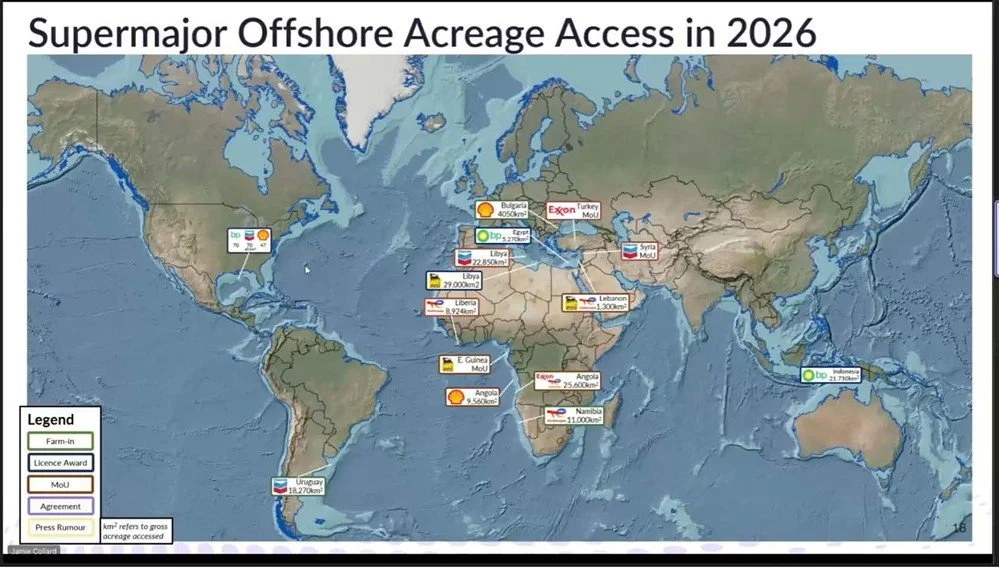
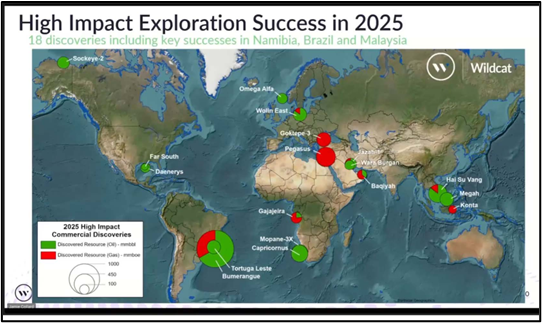
Outlook. Last week, Westwood held their outlook breakfast, and several parts of their presentation tied very well with the Deepwater Panel I moderated at the recent EWTC annual meeting in Tucson. The deepwater cycle started about three years ago, the first sign of recovery following the 2014 crash that killed deepwater projects. 80% of the projects done in a $100+ per barrel environment were negative returns. The good thing about deepwater as opposed to U.S. shale is the duration. Once a cycle starts, it can run for several years as major oil company campaigns execute multi-well programs, whereas shale activity can be started or stopped within days. The consolidation of drilling contractors has been impressive, and the number of oil companies with the wherewithal to execute such large and expensive projects has stayed flat. The following charts demonstrate where the potential is and where drilling is proceeding.
PPHB U.S. Energy Market Highlights:
Commodity Prices: WTI crude oil is currently $91.17 per barrel (up ~1.8% week-over-week) and natural gas is $3.08 per MMBtu (up ~16.3% week-over-week).
Crude Oil Production: U.S. crude oil production is currently ~13.6 MM BOPD (up ~1.0% year-over-year).
Crude Oil Inventories: U.S. crude oil inventories decreased by ~0.9 million barrels week-over-week vs. an estimated increase of ~2.1 million barrels.
Onshore Drilling Rig Count: There are currently 545 drilling rigs operating in the U.S. (increase of 5 drilling rigs week-over-week).
Taking the Lead. Last month was all about gold and semiconductors. Those were the center stage; in other words, the most popular stocks. Bank of America does a survey of global fund managers. This month, we won! 24% of those surveyed said “long oil” was the most crowded trade. That isn’t the commodity itself but the stocks within the oil sector. We were actually tied with semiconductors, which is interesting, since we usually move in reverse. Gold was very popular, with a 35% gain. The drop in gold’s prominence suggests a rotation away from traditional defensive plays even as geopolitical risks remain elevated. Short private credit is crowded as well. That hurts.
Not Everyone Will Get This

Wow. I read it so it must be true. The old saying has been, especially in institutional investment circles, that by the time it hits the newspaper, it’s already old news. Again, from an investment perspective, a day late is a dollar short. But this one might be early. The insight is stunning. Where they came up with this idea, I have no clue. “The artificial intelligence goldrush is rapidly drying up the supply of the one resource that AI developers can’t do without - computing power.” We aren’t talking about the lack of power to run AI data centers. This is about how there aren’t nearly enough data centers right now to meet the planned power generation capacity. Unlike some common commodities, when you have to pay up in a shortage, there is no more capacity. In other words, more money doesn’t always help. We aren’t talking throwing money at data centers that will open in 2027 and 2028. We are talking about this week, and it is tapped out. The biggest AI companies have seen rental rates for computer capacity rise by 50% in the last year, and rolling shutdowns from capacity limits have reached. And we can think that’s just a temporary situation and that in the next year or two, as these data centers open up, all the problems will ease. Except, that’s not the rate at which AI use is growing. And, of course, we still have the possibility that data centers will not flip on the power switch. We worry about electrons, while others worry about GPUs. When we talk about AI taking the world by storm, we mean in its use. Of course, the more you use, the more capacity is taken. Still think we’re going to have a glut in a couple of years?
Geez. In Haiti, traditional festivities were being held at a historic mountain top fortress popular with tourists in the northern end of the country. Something spooked the crowd and there was a stampede. 25 people at least were killed with 30 still in the hospital and many missing.
Ouch. The Nigerian military was going after a stronghold held by Boko Haram, the rebel group in northeastern Nigeria. This part of the country, near the border of Borneo State, is the center of the hottest insurgency that’s been tearing up the region for over 10 years. So, the Nigerian military Air Force attacked. Over 100 people were killed at a market after a misfire by the military. It was shrugged off as being fairly common, in part because the government can’t tell the difference between the terrorists or the people because they blend in so well. This is just in case you want to get indignant about something that happened this year in the world.
Hobbits? No. A Token. A token is a unit of measurement in AI to track how much computing resources are being used for a task. Remember when cell phones first came out and you were limited to a certain number of minutes? Roaming charges? You were charged for how long you talked, how big your text was and how far away from home you were. Welcome to how we’re going to get charged for using AI. Me with my chat bot reviewing the news? Not much usage, not many tokens. But ask an AI agent to re-organize and make a supply chain and all of its support inputs more efficient? That may take a few minutes. And several tokens. This is really no big surprise when you think about how desperately companies are trying to scale AI. It’s in the name hyperscale, after all. And while my $20 a month for ChatGPT may provide me a decent education, I’m not really taxing the resources of whatever GPU uses. My query runs through. I start having it analyze, recommend and implement changes to my production facility and delivery system, monitor the improvements and let it continue with changes, while thinking about what else needs to be done. I’m not sure I can get all that for $20 a month. So, while we don’t know what all of this is going to cost, start by at least learning the lingo. How many tokens do you need? For some reason, slot machines just entered into my head.
Tokens II. Tokens also refer to the quantifiable chunks of information that AI models process. OpenAI estimates one token is about four characters.
An Unexpected Byproduct? The world is hailing the coming-of-age of artificial intelligence. Well, many sing the praises of these AI models, and even more are actively implementing them into their businesses and lives. There is one area where it might have a more significant impact than had been expected. Communism thrives on controlling information and knowledge. History is subverted and the information received is filtered, so certain ideologies have no competition. Then comes basically computer programming that a person can converse with and learn from. An excellent teacher with unlimited knowledge. An article I read this week made the point that AI and communism are not compatible, and specifically noted China as the leading example. For decades, China has controlled people using information specific communication. It could shut down websites, restrict internet access and control broadcasts. While things like radio from free thinking in Western Europe, I’m sure, did some good and had some value, it was exceptionally limited. Now come AI models. As we all know, if you ask a model something, it gives you an answer. There are a whole lot of answers that the Chinese government does not want people knowing the answer to. So, the AI agents released to the public in China have had to go through very rigorous de-training, which defeats the purpose of the technology. Examples of models saying you should move to the U.S. or China’s centralized system has failed. Unlike precisely removing the offending statement, the model’s “learning” must be censored in all places that give rise to those kinds of statements. Those “threads” of now-deleted information degrade the entire model’s ability to give correct answers. And AI models from U.S. companies don’t have those same limitations in China. Knowledge is like rising water. It slowly and steadily reaches into every corner and crevice, as it inexorably moves higher. Competition for the “best” AI models between the Chinese and the U.S. has been fierce, but with politically censored models in areas with global politics, economics, finance and other topics, where something derogatory about China might exist, the water of open knowledge will swallow the ignorance, a real threat to Chinese Communism.
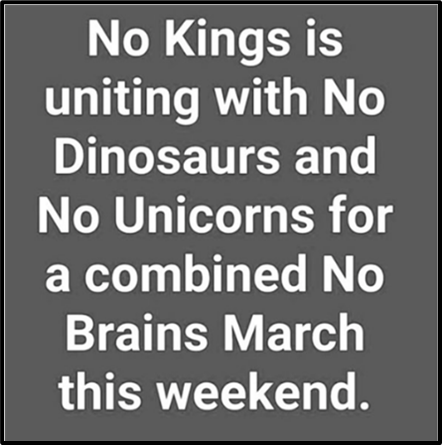
They’ve got to Have a Trailer Park. I’m moving to LA. Don’t panic. I’m not going for my acting skills. I’m going to teach! You may say, what do you know about teaching? As it turns out, you don’t need to know much, as evidenced by the performance of students in the LA Unified School District, the second largest in the nation. But like the rest of California, it is seeing people move to other states, primarily Florida and Texas. As a result, according to one administrator, they still have the workforce they did six years ago, yet enrollment is down 40%. If you didn’t see, the teacher’s union just got their members a raise. Almost 12% over the next two years, more than double the rate of inflation, a 30% of salary contribution towards pension, four weeks off for parental leave, the promise of more support and an average salary of $77,000 a year. I missed the cut though. At 63, you can retire receiving 85% of your salary for life as well as free healthcare for life. But it seems I don’t have to know much. In a very recent survey, almost 37% of the students were proficient in math and 46% were proficient in English language arts. The reason they got the raise? Those are better numbers than most of the rest of California. From looking at the signs and listening to the teachers who were protesting over the last couple of weeks, it doesn’t seem like I have to be able to spell or speak well. This is lining up with some of my best capabilities! Now if anybody knows of a mobile home park or two…
Mo’ Money. Investor-owned utilities are not tied to rate bases, but rather focus on growth and returns. There are 51 of them. They plan to spend $1.4 trillion over the next five years to upgrade their grids for increasing AI demand. In a recent survey, more than 30 of them said data centers would be a driver for growth and spending through the end of 2030. Almost as many were for fortifying the grid against severe weather. Others cited an urgent need to replace old equipment at risk of failure of investments in aging gas distribution systems, too.
Getting Pushy. State Senate Bill S.2246 orders the Massachusetts Department of Transportation (MassDOT) to set binding goals for reducing statewide vehicle miles traveled (VMT). The intent is to limit how far you can drive your own vehicle. The bill would require MassDOT to set goals to reduce the number of statewide driving miles. The goal? Reduce greenhouse gas emissions. It could be entertaining to watch how that is structured, administered and enforced. But people are too mean and not funny enough these days.
Any and all comments, arguments and rebuttals are welcome!
In addition to my association with PPHB, I serve on three private company boards. Merit Advisors is a property valuation company and I have long been a fan of optimizing how a business is run, not just the tools we make. Merit is in the business of savings companies’ money, actual cash, by doing a much more in-depth and realistic view of equipment and reserve valuations and I am very impressed with their work. I am also on the advisory board of Preng & Associates, a leading executive search boutique that specializes in all things related to Energy & Power.
I serve on the Advisory board of the Energy Workforce & Technology Council (formerly PESA), the National Ocean Industries Association (NOIA), and the Maguire Energy Institute at SMU my alma mater.
jim
214-755-3914 | james.wicklund@pphb.com
Leveraging deep industry knowledge and experience, since its formation in 2003, PPHB has advised on more than 180 transactions exceeding $11 Billion in total value. PPHB advises in mergers & acquisitions, both sell-side and buy-side, raises institutional private equity and debt and offers debt and restructuring advisory services. The firm provides clients with proven investment banking partners, committed to the industry, and committed to success.
